• Skip to main content
  • Skip to primary sidebar

Just About Cyprus

All About Cyprus

Nick Sanna

History of the Cyprus Flag and Older Cypriot Flags

February 14, 2018 by Nick Sanna

The Flag of Cyprus

The national flag of the Republic of Cyprus came into use on 16th August 1960, under the Zurich and London Agreements, whereby the federal government drafted a constitution and proclaimed that Cyprus is a sovereign and independent state.

Well-known Cypriot artist Mr. İsmet Güney designed the flag in late 1959/early 1960. The President of the Republic, Archbishop Makarios III, invited Mr. Güney to design a flag for Cyprus.

Symbolism of the Flag

What is the meaning behind the symbols?
Until 2008 and the introduction of the Kosovo flag, Cyprus was the only country to have its official flag displaying its land area. The background of the flag is white, which represents peace.

In the middle of the flag, there is a map of the island. The island is colored copper to represent the historical attachment of Cyprus to this metal.

Under the island’s map, there are olive tree branches. The branches of the olive tree are also a symbol of peace.

Waving flag of CyprusHowever, in May 2010 it was announced that the national flag would undergo a face-lift to make it sleeker.


Changes in the national republic flag

Although the government made no significant changes to the design, the latest flag of Cyprus features a slightly extended map of the island, and the olive branches will be longer.

The specifications for the latest flag design are:

  • Copper (Pantone 1385, Hex #CC7A02) for the island.
  • Dark green (Pantone 574, Hex #495928) for the olive branches.
  • The dimensions (Height to Width ratio) should be 2:3

These specifications standardize both the dimensions and colors of the Cyprus flags, which has had some variations before, for example, alternately using yellow or copper for the island’s outline.

The background will remain white, and the designated material is a polyester thread.

The national flag of Greece is often used together with the flag of Cyprus.


Constitutional Mentions of the Flag

The Republic of Cyprus constitution about the flag of Cyprus, Article 4, was adopted on 16th August 1960 and refers to the national flag as follows:-

The Republic shall have its flag of neutral design and color, chosen jointly by the President and the Vice-President of the Republic.

The authorities of the Republic and any public corporation or public utility body created by or under the laws of the Republic shall fly the flag of the Republic, and they shall have the right to fly on holidays together with the flag of the Republic both the Greek and the Turkish flags at the same time.

The authorities of the Republic and any public corporation or public utility body created by or under the laws of the Republic shall fly the flag of the Republic, and they shall have the right to fly on holidays together with the flag of the Republic both the Greek and the Turkish flags at the same time.

The Communal authorities and institutions shall have the right to fly on holidays together with the flag of the Republic, either the Greeks or the Turkish flag, at the same time.


Historical Cypriot Flags from Britannica to Joining the Euro

Shown below are versions of the Cypriot flag from various points in time of Cyprus’s history. Click on the thumbnails to see a larger image of the flags.

Royal banner of Janus of Cyprus
Royal Banner of Janus
15th century
Img src Samhanin
CC0
Flag of the Republic of Venice
1489–1571
Img src Facquis
CC BY-SA 4.0
First flag of Cyprus under British colonial rule
First Flag of Cyprus under British Colonial Rule
1881–1922
Img src Christmas Island
Public Domain
Last flag of- Cyprus under British colonial rule
Last Flag of Cyprus under British Colonial Rule
1922–1960
Img src Shandris
Public Domain
Flag in use until 1960
Flag used in 1960
Img src User:Vzb83
Public Domain
Flag used from 1960 to 2006
Flag Used from 1960 to 2006
Img src en:User:Orange Tuesday
Public Domain


The Republic of Cyprus Coat of Arms

The Cyprus coat of arms represents peace similar to the flag Much like the current flag, the Coat of Arms of the Republic of Cyprus represents peace with a white dove carrying in its beak an olive branch.

The dove resides on a shield in the yellow color of copper, a metal directly related to Cyprus’s ancient history. In the lower part of the shield, the year of establishing the Republic of Cyprus, i.e., 1960, is inscribed.

Two green olive branches encircle the shield, which together with the white dove constitute indelible symbols of peace.


Video Overview of Cypriot Flags

Share this Post on Pinterest!
Learn about the flag of Cyprus and other historical flags.

Filed Under: Information

Tombs of the Kings – Paphos

February 9, 2018 by Nick Sanna

The Tombs of the Kings in Paphos, CyprusA fascinating place to visit, Paphos, Cyprus, is a UNESCO world heritage site. Nestled within the city are the little-known Tombs of the Kings, also known as Tafoi Ton Vasileon.

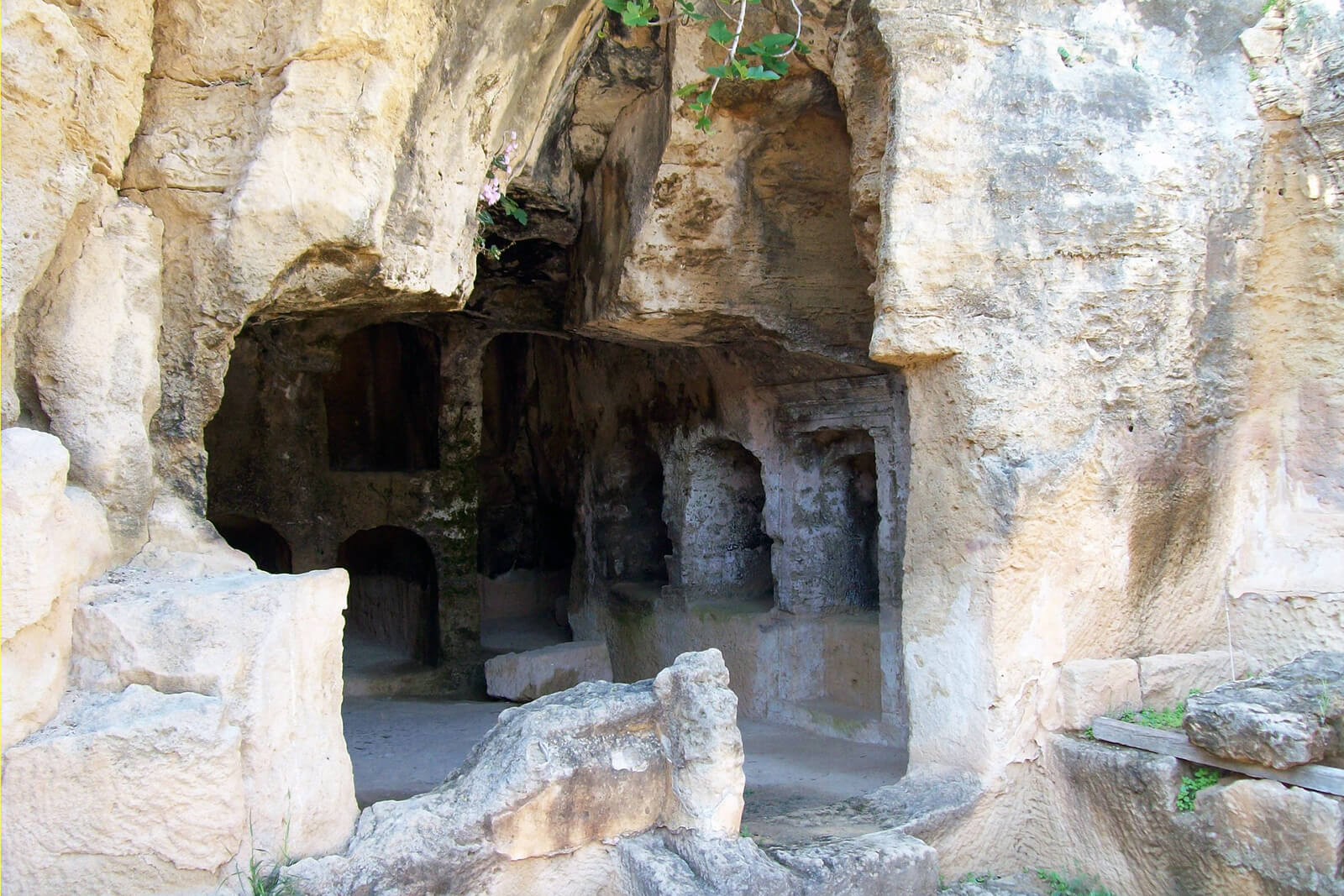
On the coast of Cyprus, Paphos is a beautiful city to visit. Rich with history, the Tombs of the Kings are a captivating site to tour and are a great addition to the itinerary of any visitors to Cyprus.

Carved into the cliffs overlooking the sea, the Tombs will leave any visitor with a stunning impression of this seaside site. The site is open to the public year round, so regardless of when a visitor is traveling to Cyprus, they can be added as a stop except for a few holidays.

Quick Facts

Season: Open year-round. Closed Christmas, New Years, and Orthodox Easter.
Hours: Fall/Winter (Sep. 16th – April 15th) 8:30am – 5:00pm
Spring/Summer (April 16th – Sep. 15th) 8:30am – 7:30pm
Admission: €2.50
Location: Paphos, Cyprus. Along the coast north of the harbor.
Archaelogical Record: 4th Century B.C.
Excavated: 1970s – 1980s
Site Uses: Burial site for wealthy elite

The architecture, beauty, and solemnity of the Tombs of the Kings deserve a visit by anyone interested in the history of Cyprus.

The Tombs Offer a Rare Glimpse into a Necropolis

This ancient site offers a time capsule to an era centuries ago. While the title is something of a misnomer, the necropolis catered to the elite, not just royalty. The passing of time has worn away some of the splendor of the necropolis, with frescoes mostly absent.

However, a visitor can still appreciate the stunning beauty in which the elite of ancient Paphos chose to spend their eternity. While in Greece and Cyprus there are many examples of ancient architecture, a trip to Paphos and to the Tombs of the Kings provides a unique architectural experience as the design is more reminiscent of the Macedonian style.

Open pit
Open Passageway
mausoleum cave
Mausoleum
Interior of the Tombs
Interior Pages
View of the sea
View of the sea

The Crypts are a Must-See Attraction

A visit to the Tombs of the Kings is a must-see for any history buff. The site is an important archaeological site, only recently excavated in the last few decades to the full extent that visitors can see today.

The construction of the site provides insight into the lives of those who chose to be buried there during the 3rd and 4th centuries B.C. Carved directly out of the rock; the underground and open-air tombs serve as an everlasting reminder of what the people entombed there found significant in their final resting place.

Doric columns and pillars iconic to the Hellenic period can still be seen in the remnants of the crypts.

The park that surrounds the Tombs is full of many significant historical sites. A full day can be spent here examining the various ruins of the ancient Cypriots.

The Whole of Paphos is Rich in History

If one is considering a trip to Cyprus, a visit to the necropolis should be added to the list. While the whole of the old city is a UNESCO World Heritage Site, something is resounding and beautiful about this necropolis that draws in visitors.

For many, the Tombs of the Kings is solely an intriguing historical site, but at one time it would have been an active site that was the final resting place for loved ones. This concept transcends time, and visiting the necropolis continues the remembrance of those who passed before.

The architecture, beauty, and solemnity of the site deserve a visit by anyone interested in the history of Cyprus.

Short Film About the Tombs

Tombs of the Kings Map and Location

Filed Under: Attractions

Agia Anna Chapel

October 17, 2017 by Nick Sanna

Cyprus is a beautiful island country located in the Eastern Mediterranean. Being a sparsely populated country, Cyprus is full of smaller fishing and farming villages.

These tiny towns are known for their white buildings and uniform architecture. With a majority of inhabitants practicing Greek Orthodox, there are churches spread throughout the island.

One such church is known as the Agia Anna Chapel and is located just south of the Fini village in northern Limassol. This small chapel was recently completed in 1993. Construction started a few years prior as several members of the village lent a helping hand. In fact, the Agia Anna Chapel was built with donations from the village.

The chapel is built with bricks and covered on the outside with concrete. It has been painted white similar to other houses and buildings within the surrounding villages. The white color helps to keep the chapel cool during the hot summers in Cyprus. The Agia Anna Chapel has also been painted white on the inside as well. There are two awnings on either side of the chapel that create a nice space for gatherings.

This chapel has been outfitted with many modern icons and emblems. Unlike many Greek Orthodox churches in Cyprus, the Agia Anna chapel doesn’t have an old iconostasis. Instead, this chapel has a wooden psalm stand and a simple iconostasis separating the sanctuary from the nave. The church has six portable icons which represent specific themes and saints. The icon of Agia Anna sits among the six other icons.

There are two entrances to the chapel of Agia Anna. However, there is no prayer area in the west entrance. There is some seating in the middle of the chapel that can accommodate a total of 50 to 70 people. The Agia Anna chapel only is in operation for two celebrations throughout the year. The celebration of the church’s namesake, Agia Anna, takes place on December 9th. The chapel is also open on the 9th of September for the celebration of Anni and Ioakim.

The Agia Anna chapel is worth a visit for any tourist in the area. As Cyprus is not a large island, this chapel and the surrounding villages aren’t far from the typical tourist destinations. This spot offers visitors a great opportunity to see what daily life is like in the villages throughout Cyprus.

Filed Under: Attractions

  • « Go to Previous Page
  • Page 1
  • Interim pages omitted …
  • Page 11
  • Page 12
  • Page 13

Primary Sidebar

Who is Just About Cyprus?

Just About Cyprus is a free resource for travelers looking to visit the island of Cyprus. We feature informational articles about attractions, culture, and recipes. Just About Cyprus is owned and operated by Redland Media. To learn more, please visit our about us page.

Learn Greek Language

Cyprus Cuisine

Moussaka recipe

Cyprus Recipes – Moussaka

Arguably, the best known Greek dish, moussaka is a vegetable (traditionally … [Read More...] about Cyprus Recipes – Moussaka

Flaounes

Cyprus Recipes – Easter Flaounes

Flaounes are sweet pastries (sometimes referred to by foreigners as pies) … [Read More...] about Cyprus Recipes – Easter Flaounes

Explore Cyrpus

Odeon amphitheater in Old Paphos

Ancient Odeon – Paphos

While staying in Paphos, visitors should take advantage of the offerings of … [Read More...] about Ancient Odeon – Paphos

 A traditional Cypriot dance performance in Lanarca Municipality.

Annual Larnaca Municipal Events

The beautiful city of Larnaca is found on the southern coast of Cyprus and … [Read More...] about Annual Larnaca Municipal Events

Categories

  • Attractions
  • Blog
  • Culture
  • Information
  • Lifestyle
  • Recipes

JustAboutCyprus.com is a participant in the Amazon Services LLC Associates Program, an affiliate advertising program designed to provide a means for sites to earn advertising fees by advertising and linking to Amazon.com. Amazon and the Amazon logo are trademarks of Amazon.com, Inc or its affiliates.

Who is Just About Cyprus?

Just About Cyprus is a free resource for travelers looking to visit the island of Cyprus. We feature informational articles about attractions, culture, and recipes. To learn more, please visit our about us page.

Cyprus Cuisine

greek village salad

Cyprus Recipes – Village Salad

The village salad is yet another crucial component of mezes in Cyprus. It … [Read More...] about Cyprus Recipes – Village Salad

tzatziki

Cyprus Recipes – Tzatziki Dip

Tzatziki dip is a popular condiment with variations found in Greece and … [Read More...] about Cyprus Recipes – Tzatziki Dip

Explore Cyprus

Limassol Castle

Limassol Castle

While the castle, also known as Lemesos Castle, dates back to the Middle … [Read More...] about Limassol Castle

Prodromos village

Village of Prodromos – Limassol

At 4,530 feet (1,380 meters), Prodromos village is the highest settlement … [Read More...] about Village of Prodromos – Limassol

Just About Cyprus

  • Contact Us
  • About Us
  • Terms of Service
  • Privacy Policy

© 2026 Just About Cyprus